Easy Dragon Scale Fingerless Gloves Crochet Pattern
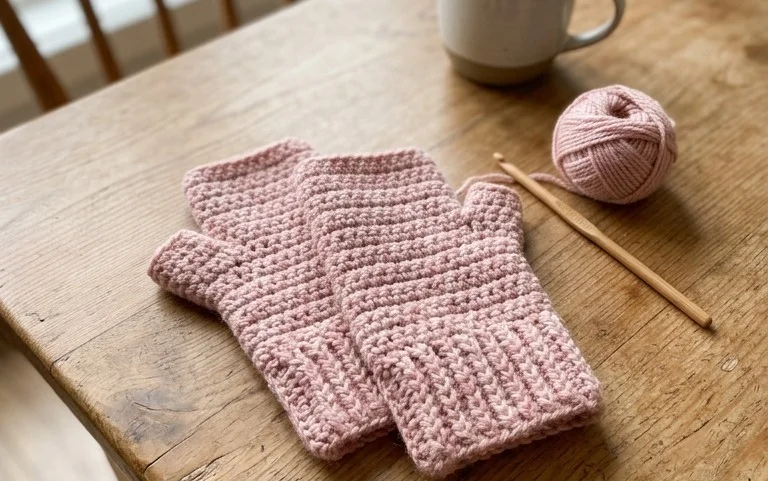
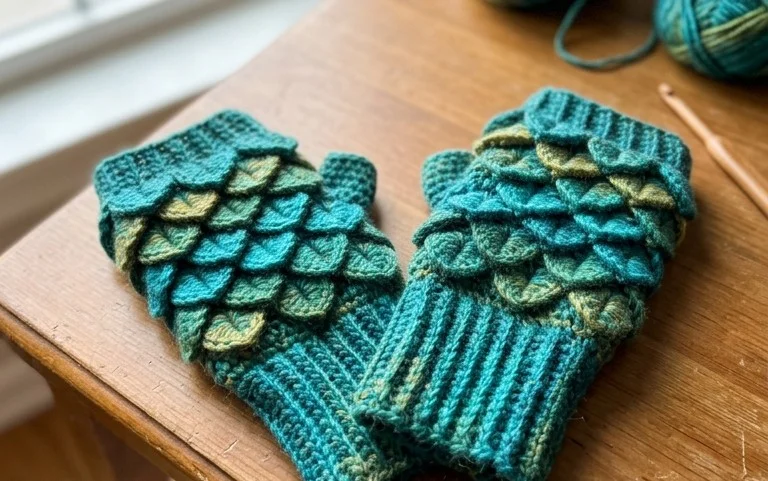
Layered crochet scales give these fingerless gloves a textured, dragon-inspired look, while the open fingertips leave your hands free to type, turn pages, or hold a warm mug. The fabric feels cozy around the wrists and palms, and the scale stitch adds a satisfying rhythm once you get comfortable working into the rows. This project suits crocheters who have practiced basic stitches and want to try a new texture, as well as gift makers planning a handmade pair for chilly days. You’ll learn how the overlapping scale stitches build their raised pattern and how to shape the gloves for a comfortable fit. Choose a smooth yarn so each scale stands out clearly, and check your sizing as you work.
Why You’ll Love This Pattern
This cotton crochet washcloth is made in simple single crochet rows, so you can work it in short sessions without keeping track of a complicated stitch pattern. The finished square is useful for washing dishes, wiping counters, or keeping beside the sink, and its compact size makes it a practical handmade gift.
A single ball of worsted-weight cotton is usually enough, and leftover cotton can be used for stripes if you have enough yarn in each color. The dense fabric holds up to regular use, while the repeated rows give beginners a straightforward way to practise even tension and counting.
The rows were easy to follow, and I liked having a useful project I could finish over a weekend.
— Amy, beginner crocheter
Pattern Overview & Skill Level
- Skill Level: Beginner. You need to know how to chain and make single crochet.
- Approximate Time: 3–5 hours, depending on your pace and how often you stop to check your stitches.
- Construction: The washcloth is worked flat in back-and-forth rows, starting with a foundation chain. No seaming or joining is needed.
- Finished Dimensions & Sizing: About 7.5 × 7.5 in (19 × 19 cm) at the gauge below. The fabric may relax slightly after washing.
Gauge is 16 single crochet stitches and 18 rows in 4 in (10 cm), measured after lightly washing and drying a swatch. Gauge affects the finished size and yarn use. If your swatch is wider than 4 in, try a smaller hook; if it is narrower, try a larger hook.
Materials & Supplies Needed
- Yarn: About 90 yd (82 m) of worsted-weight (#4) 100% cotton yarn. Use one color, or combine washable cotton colors for stripes.
- Hook: 5.0 mm / US H-8 crochet hook, or the size needed to meet gauge.
- Notions: Tapestry needle for weaving in the starting and finishing tails, scissors, and a ruler or tape measure.
- Substitutions: A similar-weight cotton-linen blend can work, though it may feel less soft and have a slightly different drape. Avoid acrylic for a dishcloth because it tends to absorb water less readily. A thinner or thicker yarn changes the finished dimensions and may require a different hook.
Stitch Guide & Abbreviations (US Terms)
- ch = chain.
- sc = single crochet. Insert the hook in the stitch, yarn over and pull up a loop, then yarn over and pull through both loops.
- st = stitch.
- RS = right side, the face of the work intended to show.
- WS = wrong side, the opposite face of the work.
The turning chain does not count as a stitch in this pattern. Work the first single crochet into the first stitch of each row, directly beside the turning chain. The edges can look uneven if the turning chain is accidentally counted as a stitch.
Step-by-Step Pattern Instructions
Washcloth
- Foundation: Ch 31. Keep the chain relaxed so the lower edge does not pull in.
- Row 1 (RS): Sc in the second ch from the hook and in each ch across. Turn. (30 sts)
- Row 2: Ch 1, sc in each st across. Turn. (30 sts)
- Rows 3–30: Repeat Row 2 for 28 more rows, keeping 30 sc in every row. Turn at the end of each row. (30 sts per row)
After Row 30, the piece should measure about 7.5 in (19 cm) square. If it is notably shorter or longer, check the row gauge and add or remove rows before fastening off. To finish, cut the yarn, leaving a 6 in (15 cm) tail, and pull the tail through the last loop. Thread it onto a tapestry needle and weave it through several stitches on the wrong side. Change direction once, then trim the remaining end close to the fabric without cutting the stitches.
Finishing
Wash the cloth before first use to remove any loose fibers from the yarn. Lay it flat and gently smooth the edges into a square while damp. This is a plain-edged design, so no border is required; the even stitch count keeps both sides easy to identify and use.
Care & Washing Instructions
- Wash cotton in warm water, up to 40°C (104°F), with like colors and a mild detergent.
- Dry flat or tumble dry on low, following the yarn label; high heat can shrink cotton.
- While damp, smooth the cloth back into a square and let it finish drying flat. Follow the yarn label if your fiber blend differs.
Pro Tips & Common Mistakes to Avoid
- Keep your chain and rows at a steady tension. A tight foundation chain can make the bottom edge narrower than the rest, so use a relaxed grip or a hook half a size larger for the chain if needed.
- Count the stitches at the end of early rows and confirm there are 30. If the edges gain stitches, you may be working into the turning chain; if they lose stitches, check that the first and last stitches are not being skipped.
- Weave in each end on the wrong side through several stitches, then change direction. A short, secure weave is less likely to work loose during repeated washing.
- To make a larger cloth, add stitches to the foundation chain and add rows to match the new width. Each extra stitch and row uses more yarn; make a small gauge swatch first if you need a specific finished size.
Frequently Asked Questions
Can I use a different yarn fiber?
Yes, but cotton is a good choice for a washcloth because it absorbs water and tolerates frequent washing. A cotton-linen blend may feel firmer. Check the yarn label and expect a different texture or finished size if the fiber or yarn weight changes.
How can I make the washcloth smaller or larger?
For a narrower cloth, begin with fewer chains; for a wider one, begin with more. Add or remove rows to adjust the height. Keep the foundation chain one chain longer than the number of stitches you want, because the first single crochet goes into the second chain from the hook.
Is this pattern suitable for a first crochet project?
Yes. It uses only chains and single crochet, with no increases, decreases, color changes, or sewing. Practise counting 30 stitches across each row, since consistent edges are the main challenge.
May I sell washcloths made from this pattern?
Check the designer’s terms before selling finished items, and follow any requirements for credit or permitted sales. Use your own product photos and describe the yarn and care instructions accurately.
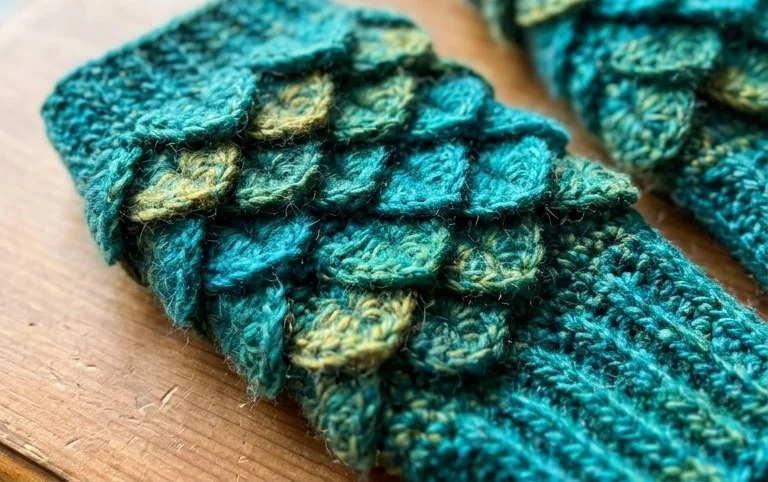
A finished pair of dragon-scale fingerless gloves has a distinctive raised texture and keeps your palms covered while leaving your fingertips ready for everyday tasks. For a simple variation, work the scales in a deep green or charcoal yarn, or choose a lighter shade that makes each overlapping row easy to see. If you make a pair, share a photo on Pinterest or your favorite social media platform; a close-up of the scales shows the texture especially well. You can also browse the blog for more free crochet patterns, including practical accessories and projects that use other textured stitches.