Folded Star Pot Holder Free Sewing Pattern for Beginners
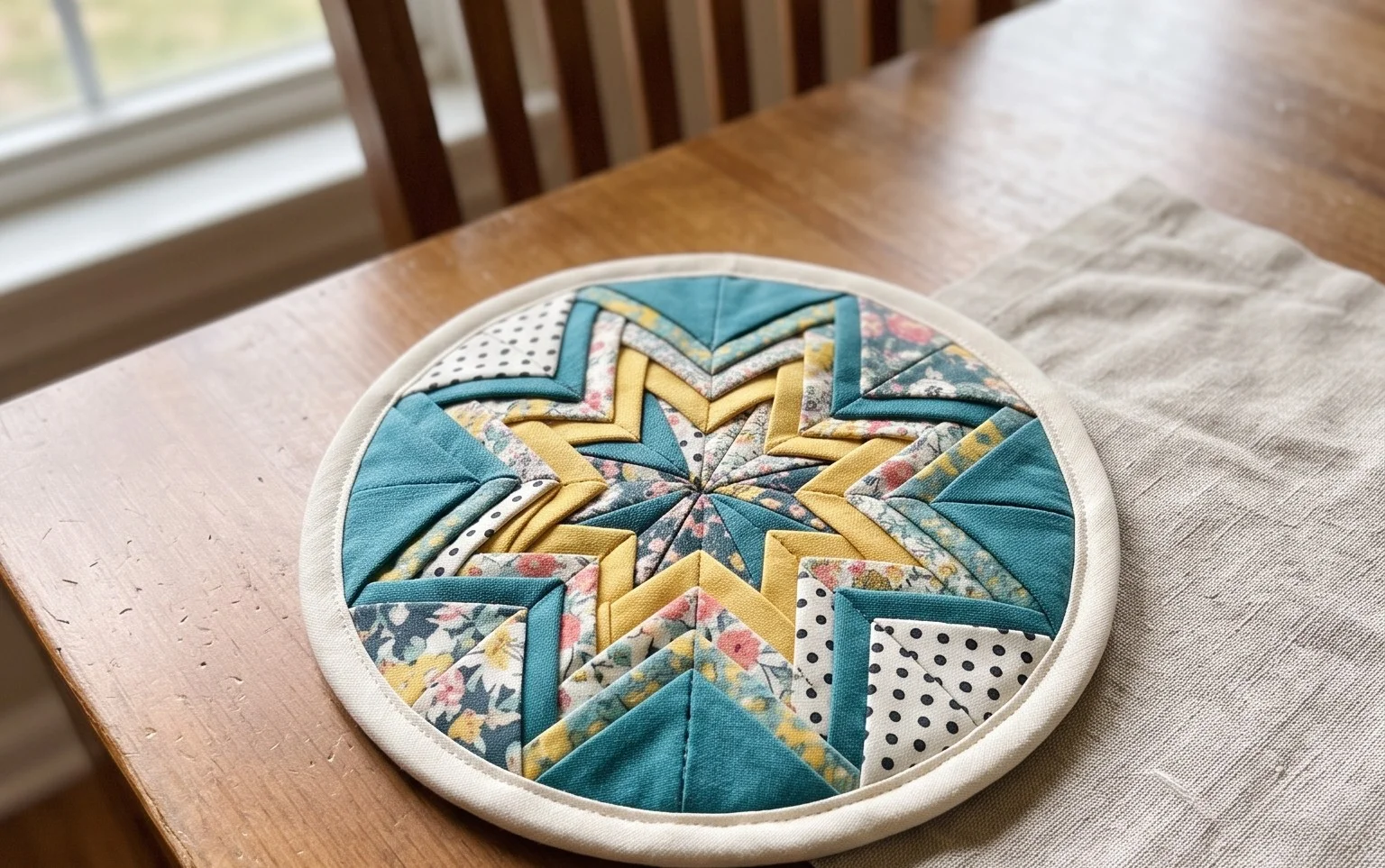
Crisp cotton points come together in a folded star pot holder that adds a cheerful patchwork detail beside the stove. The finished piece has a softly padded feel and a layered star on top, with each folded section adding shape and color. It suits newer sewists who want to practice accurate folding, as well as experienced makers looking for a useful handmade gift or a fresh accent for the kitchen. You’ll learn how the fabric pieces are folded and arranged to form the star, then stitched into a heat-resistant holder with a neat finish. Choose coordinating prints for a traditional look, or mix small scraps for a playful design. The project is satisfying to make because the pattern appears as the layers come together, and the finished pot holder is ready to use or give.
Why You’ll Love This Pattern
A firm square of cotton yarn makes a useful dishcloth for everyday washing, wiping counters, or keeping beside the sink. This beginner-friendly pattern uses single crochet throughout, so you can focus on keeping the edges straight and the fabric even. The plain texture is easy to count, and the finished cloth can be made in one color or from leftover cotton. It takes about two to three hours, depending on your pace, and needs no sewing or complicated finishing.
The row count was easy to follow, and the cotton made a sturdy cloth that softened after washing. I finished mine in an afternoon.
— Maya, sample maker
Pattern Overview & Skill Level
- Skill Level: Beginner. You need to chain and work single crochet in rows.
- Approximate Time: 2–3 hours, including weaving in the ends.
- Construction: Work a flat rectangle in single crochet rows, then fasten off and weave in the ends.
- Finished Dimensions & Sizing: Approximately 8 × 8 in (20 × 20 cm), after washing and drying flat. Gauge is 14 single crochet stitches and 16 rows per 4 in (10 cm). A small difference in gauge will change the finished size.
Materials & Supplies Needed
- Yarn: About 75 yd (69 m) of worsted-weight (#4) 100% cotton yarn. Use one color or divide the amount between two colors.
- Hook Size: 5.0 mm (US H-8). If your swatch is larger than the stated gauge, try a 4.5 mm hook; if it is smaller, try a 5.5 mm hook.
- Notions: Tapestry needle for weaving in ends, scissors, and a ruler or tape measure for checking gauge.
- Substitutions: Use another worsted-weight cotton yarn with a similar care label. A cotton-linen blend can feel firmer, while a cotton-acrylic blend may be less absorbent. Thicker or thinner yarn changes the cloth’s size and texture, and may change how much yarn you need.
Stitch Guide & Abbreviations (US Terms)
- ch: Chain.
- sc: Single crochet. Insert the hook into the indicated stitch, yarn over and pull up a loop, yarn over again and pull through both loops on the hook.
- st: Stitch.
- sts: Stitches.
For a turning chain, make 1 chain at the end of a row and turn the work. That chain does not count as a stitch in this pattern. Work the first single crochet into the first stitch of the row.
Step-by-Step Pattern Instructions
Dishcloth
- Foundation: Ch 29. This chain provides 28 stitches for the first row.
- Row 1: Sc in the second ch from the hook and in each ch across. Turn. (28 sts)
- Row 2: Ch 1, sc in each st across. Turn. (28 sts)
- Rows 3–32: Repeat Row 2. At the end of every row, check that you have 28 sts, then turn. (28 sts per row)
Measure the fabric after Row 32. It should be close to 8 in (20 cm) long if your gauge matches. If it is a little shorter or longer, the cloth will still work; for a closer square, add or remove a few rows. Keep the same stitch count on every row.
Finishing
After Row 32, fasten off, leaving a tail of about 6 in (15 cm). Thread the tail onto a tapestry needle and weave it through several stitches on the wrong side, then change direction and pass it through a few nearby stitches. Weave in the starting tail the same way. Trim the ends close to the fabric without cutting into the stitches. Wash and dry the cloth flat before using it; this helps the cotton settle into its final shape.
Care & Washing Instructions
- Wash cotton in a machine on a warm cycle, up to 40°C (104°F), or hand-wash in warm water with mild detergent.
- Dry flat to help the square keep its shape; reshape the corners while the cloth is damp.
- Blocking is usually optional for a dishcloth. If the edges curl, pin the damp cloth into a square and let it dry fully; follow the yarn label if its care instructions differ.
Pro Tips & Common Mistakes to Avoid
- Keep your tension even: Cotton has less stretch than wool, so very tight stitches can make the cloth stiff. If your hands feel strained or the hook is hard to move, loosen your grip or try a larger hook.
- Count the row ends: Each row must have 28 single crochet stitches. It is easy to skip the last stitch near the turning chain, so check both edges before turning.
- Weave ends into the fabric: Use a tapestry needle to pass each tail through the backs of several stitches, changing direction once. Avoid pulling so tightly that the edge puckers.
- Adjust size with care: To make the cloth wider, add chains to the foundation, then work the same number of single crochet stitches across. To make it longer, add rows. A larger cloth uses more yarn; check your remaining yarn before changing both dimensions.
Frequently Asked Questions
Can I use a different yarn weight?
Yes, but the finished cloth will change in size and feel. A lighter yarn makes a smaller, finer fabric, while a heavier yarn makes a larger, thicker cloth. Choose a hook that gives you a fabric with enough drape to wipe surfaces, and expect the yardage to vary.
How can I make the dishcloth smaller or larger?
Change the foundation chain to adjust the width, making sure it gives you the number of stitches you want plus one turning chain. Work more or fewer rows to adjust the length. Keep the edges straight by counting every row, and allow extra yarn for a larger cloth.
Is this pattern suitable for a first crochet project?
Yes. It uses chains and single crochet in flat rows, with no shaping, color changes, or sewing. Practise a few rows first if your edges are uneven. Counting 28 stitches at the end of each row helps prevent the cloth from gradually widening or narrowing.
Can I sell dishcloths made from this pattern?
Check the designer’s terms before selling finished items made from a published pattern. If you sell your work, describe the yarn and care instructions accurately, and do not claim the pattern itself as your own.
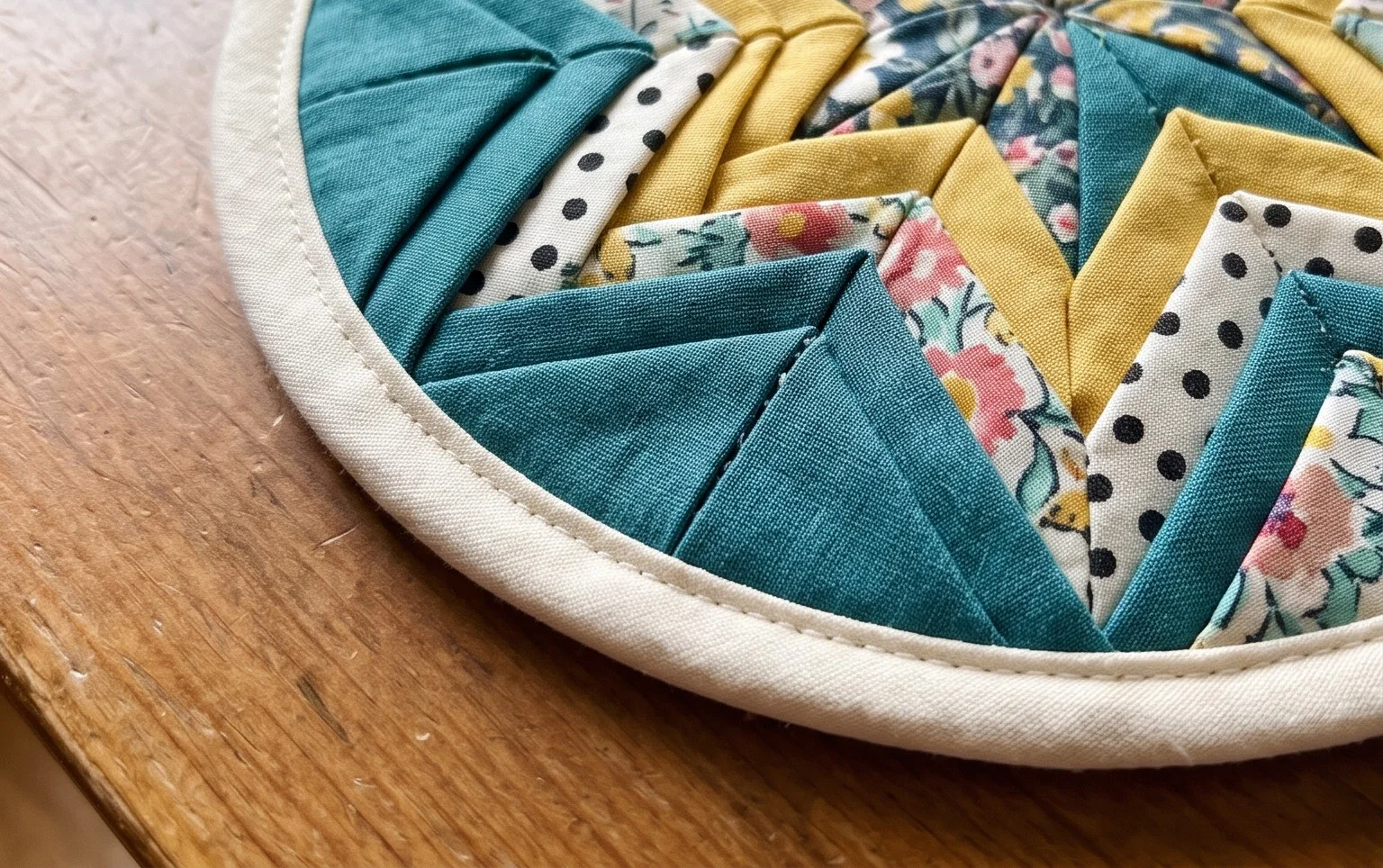
Your folded star pot holder brings a little color to the kitchen while giving you a useful place to set a warm pan. Take a moment to check that the layers are secure and the padding sits evenly before using it, especially around the outer points. For a simple variation, choose two contrasting cotton prints so the star shape stands out clearly against its background. Share a photo of your finished piece on Pinterest or your favorite social media, and let other makers see the colors you chose. If you enjoyed sewing this project, explore more free patterns on the blog for practical handmade pieces and thoughtful gifts.